My Instruments
In classical percussion what interests me most are sonic niches, sounds and instruments not commonly heard and unusual playing techniques. I have been drawn towards sonic experimentation ever since I can remember and that's why I started playing contemporary classical music predominantly soon. But of course also ancient musics offer great liberties where I can make use of my rather special instruments. In the following I will give short descriptions of the different types of instruments I play besides the classical percussions. Some of the more special items are described individually.
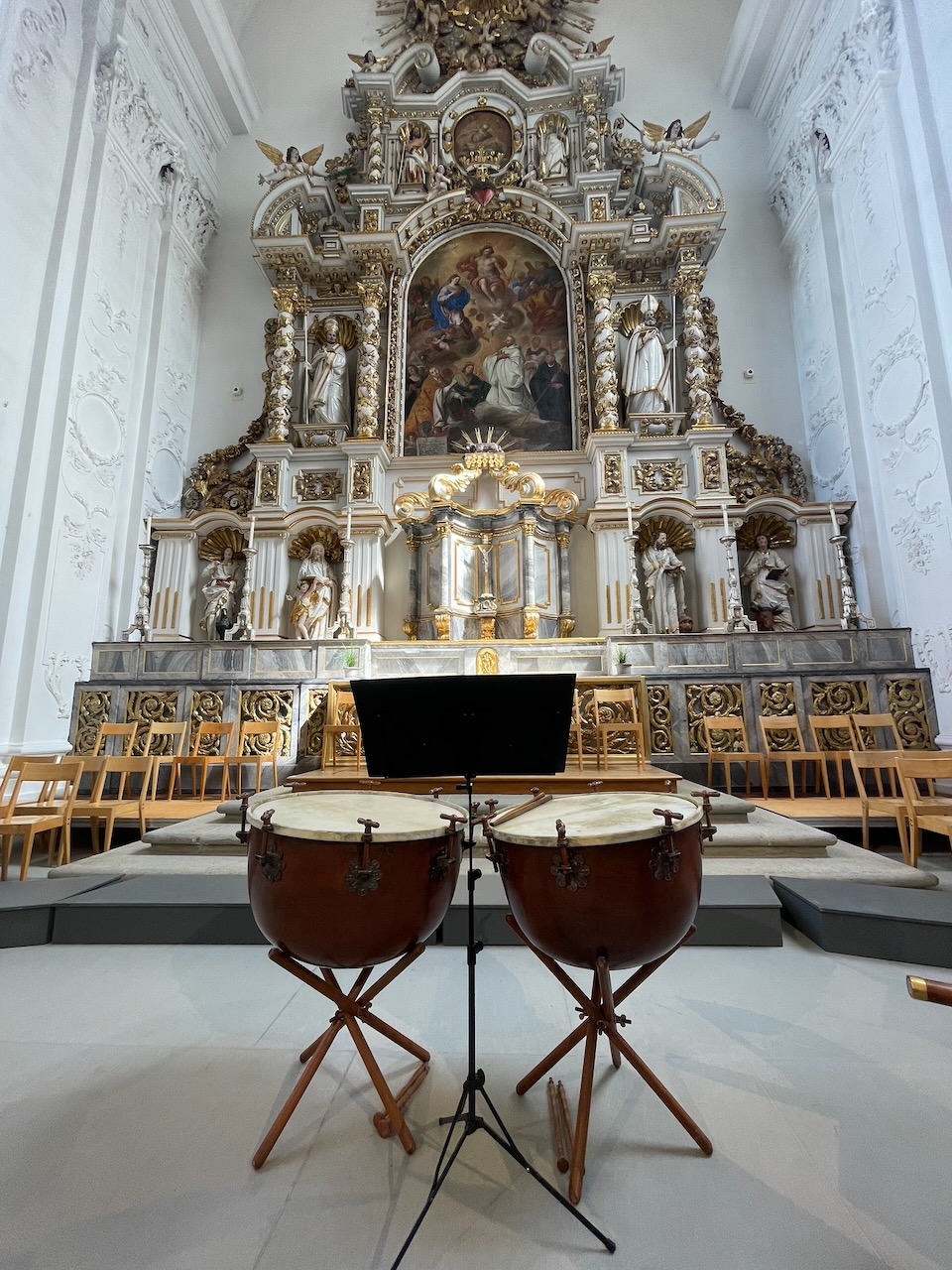
The term "Baroque Timpani" refers to kettle drums without any central tuning mechanism – it's not only used for instruments from the baroque musical period but also applies to timpani commonly used well into the 19th century. Compared to modern symphonic timpani, the baroque timpani usually have more shallow (often rather hemispherically shaped) bowls with smaller diameters in relation to the note they're tuned to. The heads were usually mounted directly onto the tuning rings. Separate "flesh hoops" just for the skin only became standard in the 19th century.
I have three pairs with slightly different caracteristics in my collection.
I have three pairs with slightly different caracteristics in my collection.
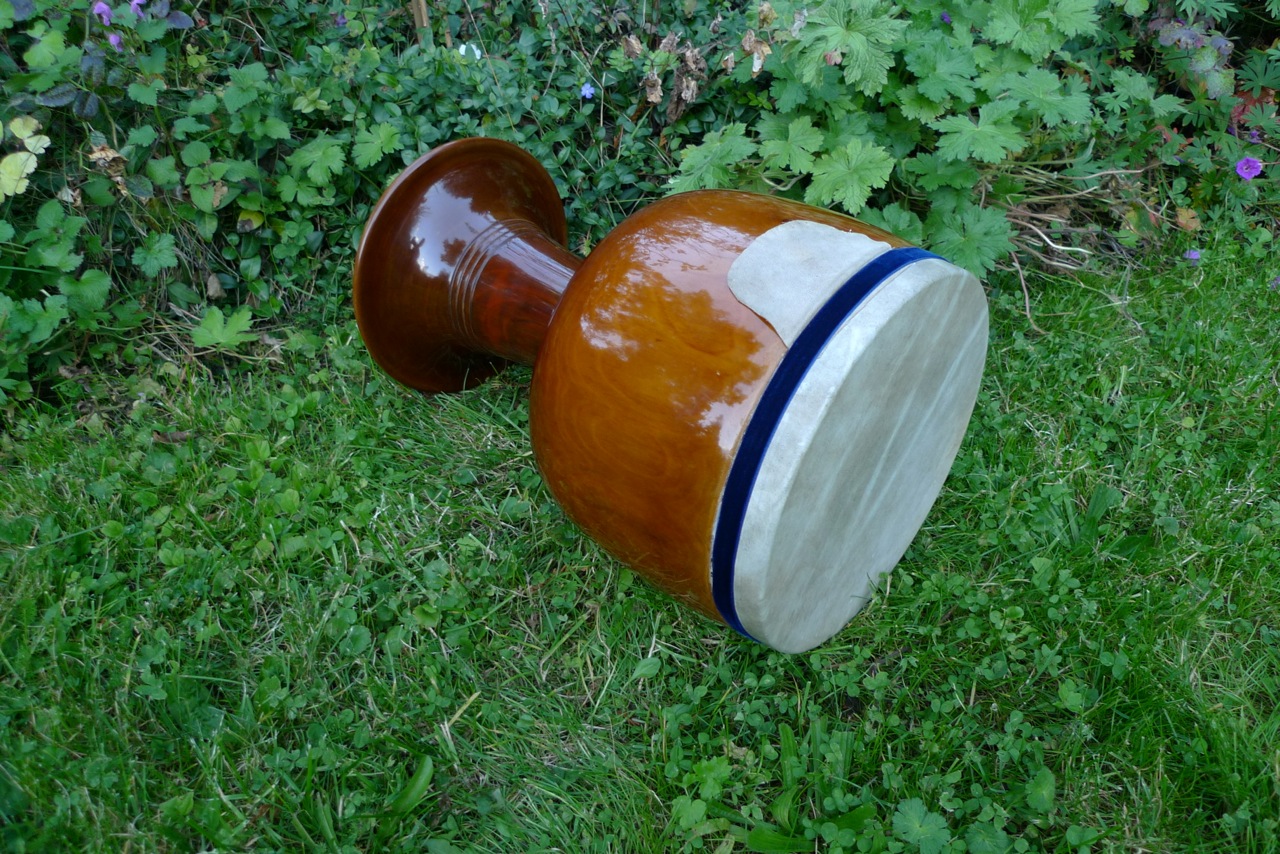
The Persian (Iranian) Tombak (also known as Zarb) is the chief percussion in classical Persian music. Its playing technique is extremely rich, producing a wide palette of sounds. This makes the Tombak a very versatile instrument that blends well with many instruments and musical styles.
The drum pictured here was lathed by Davood Radman and then finished with a french polish (shellaque) by myself. In the adjoined audio („Zetuni Zar“ with Ostwind) you can hear the tombak playing from 0:37 onwards. Before that there are various rattles and chimes to be heard as well.
The drum pictured here was lathed by Davood Radman and then finished with a french polish (shellaque) by myself. In the adjoined audio („Zetuni Zar“ with Ostwind) you can hear the tombak playing from 0:37 onwards. Before that there are various rattles and chimes to be heard as well.
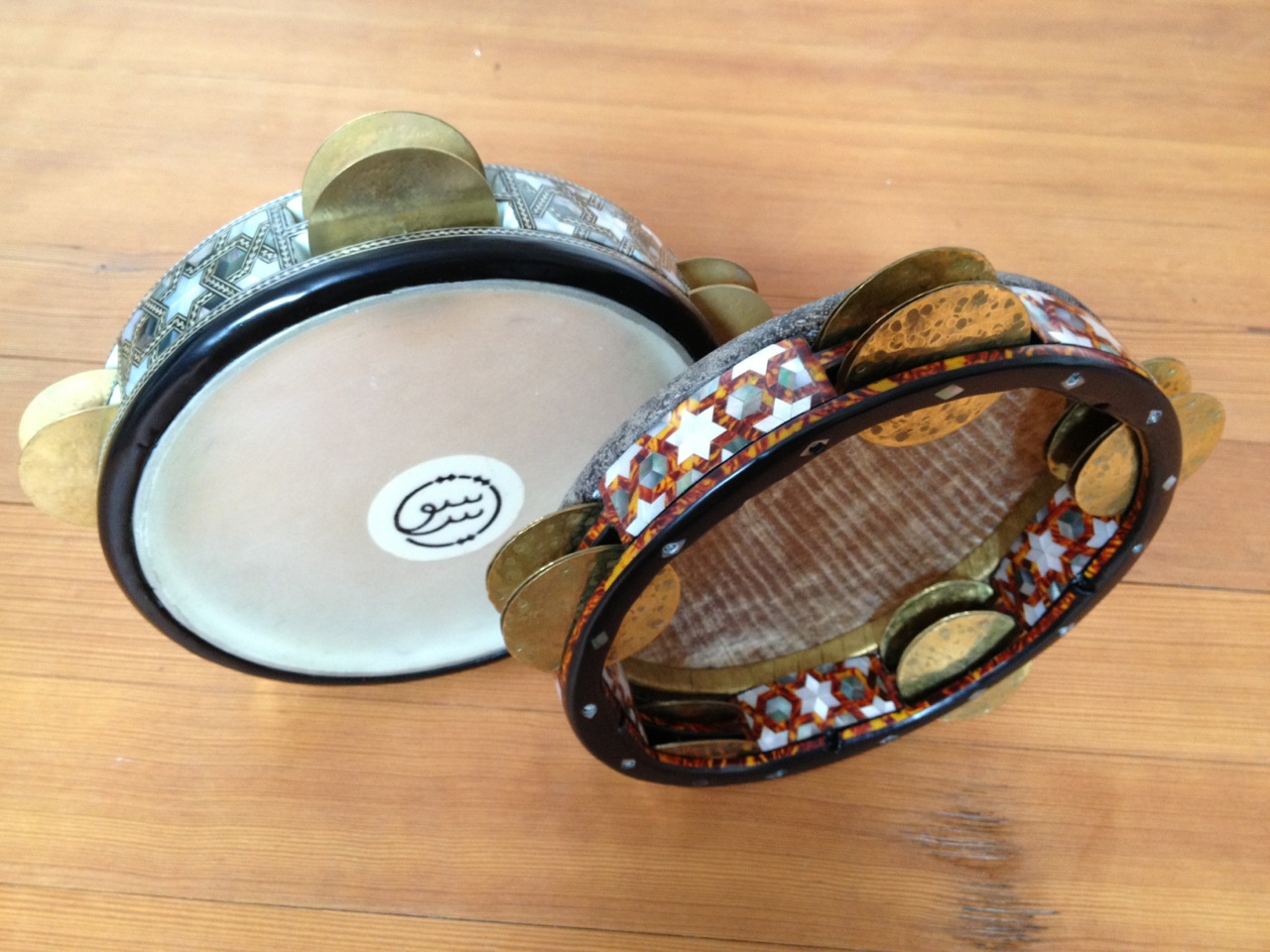
The small tambourine Riq is the chief drum in classical Arab music. Its dynamic range and broad spectrum of colours are amazing. There are two main playing positions producing quite different sounds: in "classical" or "skin" position both hands are holding the drum with the fingers placed on the skin. Thus the sound is a dry one. For open sounds the fingers have to be lifted off the skin. In "Cabaret" or "jingle" position one hand holds the drum – it can shake the drum and play the jingles like castagnets – while the other on plays both skin and jingles.
My Riqs are built by Nakhle, Kevork, Lev Elman and myself.
My Riqs are built by Nakhle, Kevork, Lev Elman and myself.
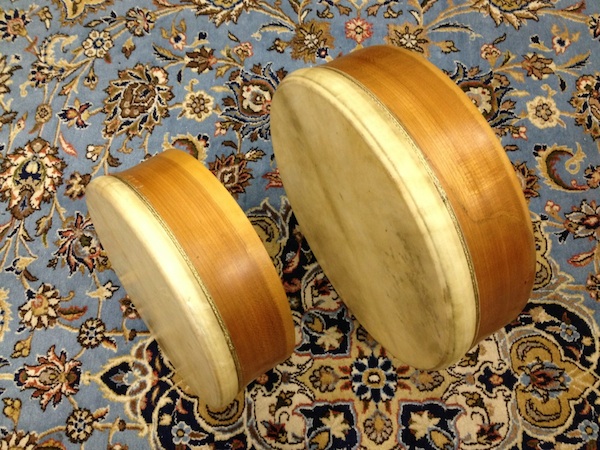
Frame drums are among the oldest instruments known to mankind. I play many kinds of frame drums, from smaller handheld ones that you can play standing, walking or dancing up to large drums played resting on the thighs (this is what is called lapstyle frame drumming). My two main makers are David Roman Drums (David Faulwasser, Berlin) and Cooperman (Vermont, USA).
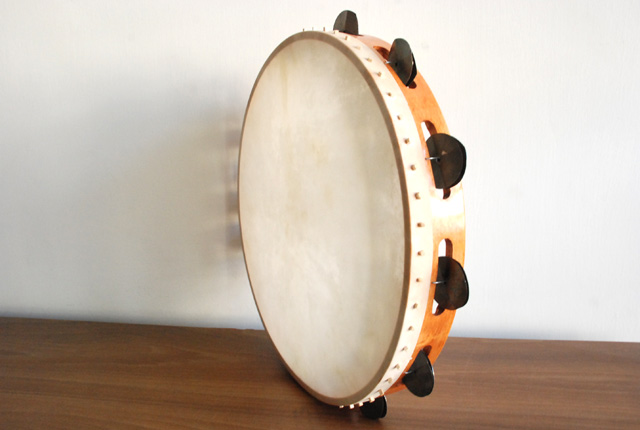
The Tamburello is the Italian variant of the tambourine. It's usually a jingled drum but there are also types with no jingles called "tamburello muto" ("mute tambourine"). Almost all regions of Italy know their own styles of playing the Tamburello and have different techniques. A common denominator is though the triplet based micropulse and playing multiple strokes in one fluid motion. I studied both traditional and more contemporary styles of playing Tamburello with Roberto Chiga and Andrea Piccioni and play Tamburelli predominantly in Ancient music (usually for dances).
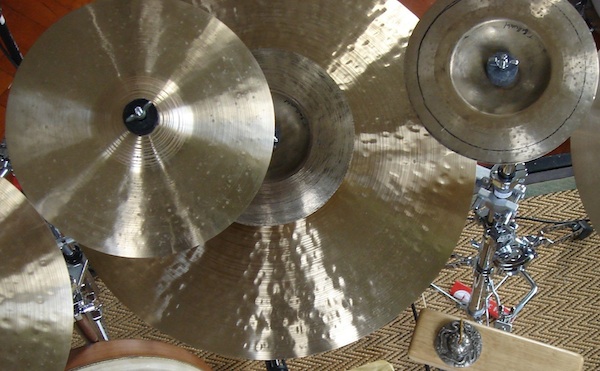
Cymbals were introduced in Europe via the Janissaries. These troops of the Ottoman empire had riding musical corps with various instruments and their percussion section was replicated in European orchestras in the 18th century. Not only were cymbals added then to the western orchestra, but also the bass drum and triangle were part of the turkish percussion section. Today Turkey is still the origin of many exquisite cymbals. But there are other styles of cymbals than turkish ones - Asian cymbals come in many different shapes and produce sounds often much different from turkish ones. While drums tend to have a short sound with much attack, cymbals, bells and gongs usually reverberate for much longer times. So they can open another sonic universe as contrasting sounds.
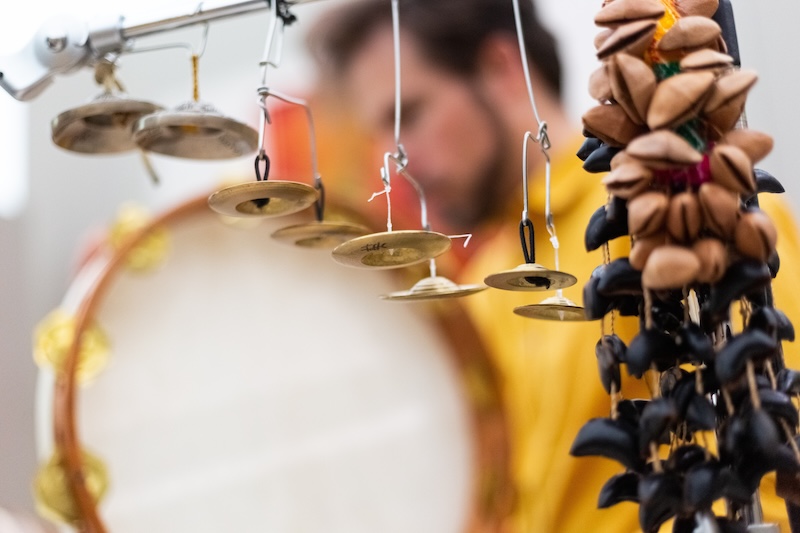
In my sound palette rattles and other simple idiophones take a prominent place. I use all kinds of rattles made from seeds, nuts or even sea urchin spines along with finger cymbals and little bells to create atmospheres. I find that these often bring something to a tune that can make all the difference. In my bag of stuff there are also jew's harps (also referred to as "jaw harps"), whistles and shakers made from all kinds of materials.